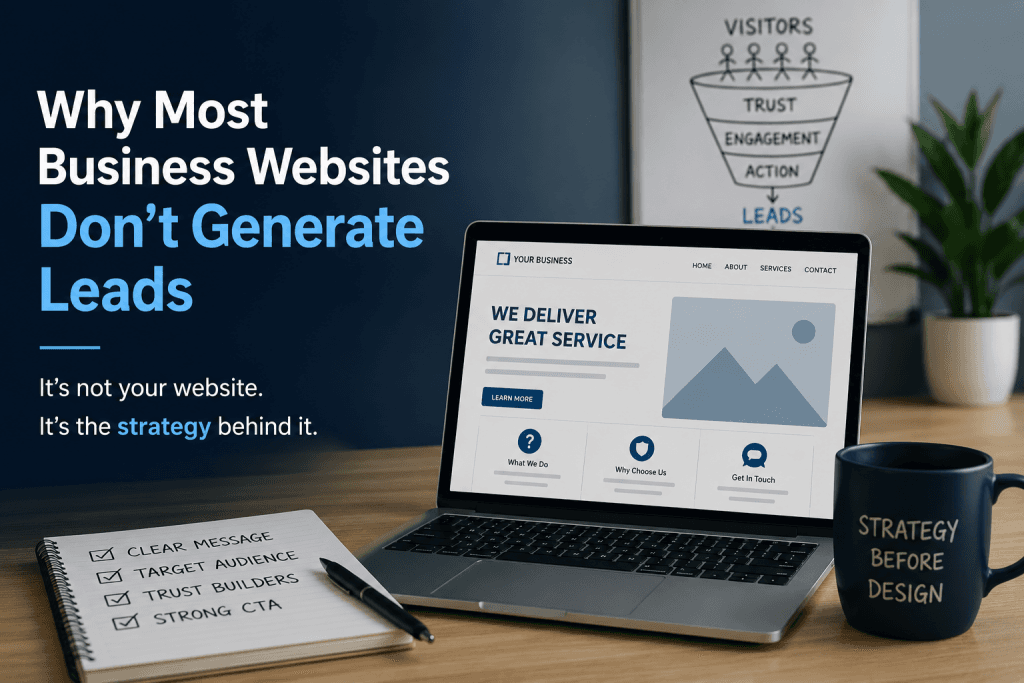
Many business owners assume that if they have a modern-looking website, customers will naturally begin contacting them. Unfortunately, that’s rarely how it works.
A website is only one part of the customer journey. If it doesn’t answer the right questions, build trust, and guide visitors toward taking action, even a beautiful website can become little more than an online brochure.
The good news is that most lead-generation problems are fixable once you understand what’s getting in the way.
The Problem
Visitors often arrive on a website with a specific question or need. They want to know:
- Can this company solve my problem?
- Why should I trust them?
- What happens if I contact them?
- How much experience do they have?
If those questions aren’t answered quickly, visitors simply leave and continue their search elsewhere.
Many websites focus almost entirely on describing the company rather than helping potential customers understand how their own problems will be solved.
Common Reasons Websites Fail
Several issues appear again and again.
The message isn’t clear.
Visitors should understand within a few seconds what your business does, who you help, and why you’re different.
There isn’t a clear next step.
Every page should encourage visitors to take a logical next action—whether that’s scheduling a consultation, requesting more information, or completing a discovery questionnaire.
The website focuses on features instead of outcomes.
Customers care less about the technology you use than about the results they’ll receive.
The website doesn’t build trust.
Case studies, testimonials, certifications, and real examples of your work help reduce uncertainty and demonstrate credibility.
What Better Looks Like
An effective business website guides visitors through a conversation.
Rather than simply presenting information, it helps people understand their problem, demonstrates your expertise, builds confidence, and makes it easy to take the next step.
Every page should have a purpose.
Every section should move the visitor closer to becoming a customer.
Key Takeaways
Your website shouldn’t exist simply because every business needs one.
It should become a valuable business tool that supports sales, builds trust, answers questions, and generates opportunities around the clock.
When strategy comes before design, websites become investments instead of expenses.
A website should do more than look professional—it should help move visitors toward becoming customers. If your website isn’t generating inquiries, the problem may have less to do with design than with strategy.